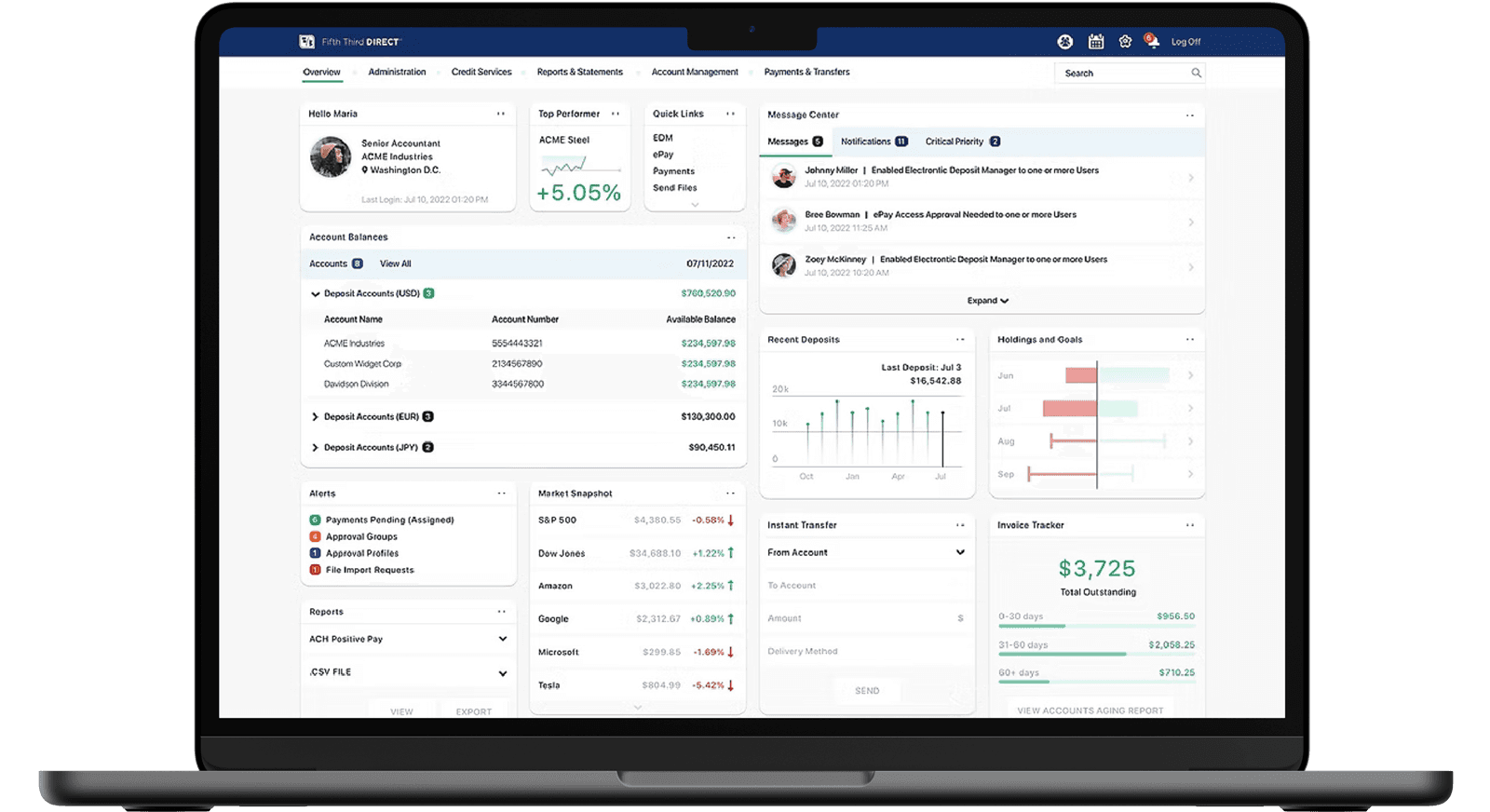
Fifth Third Direct is the commercial banking web application for Fifth Third Bank's business clients, a wide range of commercial customers from small business owners managing day-to-day finances to corporate treasury teams navigating complex multi-account structures.
The application had grown through years of feature accumulation driven by technical feasibility and client requests, without consistent UX oversight. By the time the redesign was initiated, customer complaints had escalated to leadership. The product worked, but it didn't work well for the people using it every day. That gap is where this project started.
The Problem
Research & Discovery
Preference Testing
"This one is big for us… we can't even help them with this right now, we have to get the Implementations Team involved, which can take days… so if they could self service like this? Huge."
"This one is big for us… we can't even help them with this right now, we have to get the Implementations Team involved, which can take days… so if they could self service like this? Huge."
"This one is big for us… we can't even help them with this right now, we have to get the Implementations Team involved, which can take days… so if they could self service like this? Huge."
— Markus, Commercial Customer Support Specialist
— Markus, Commercial Customer Support Specialist
The Redesign
The Full Process
The work behind the work.
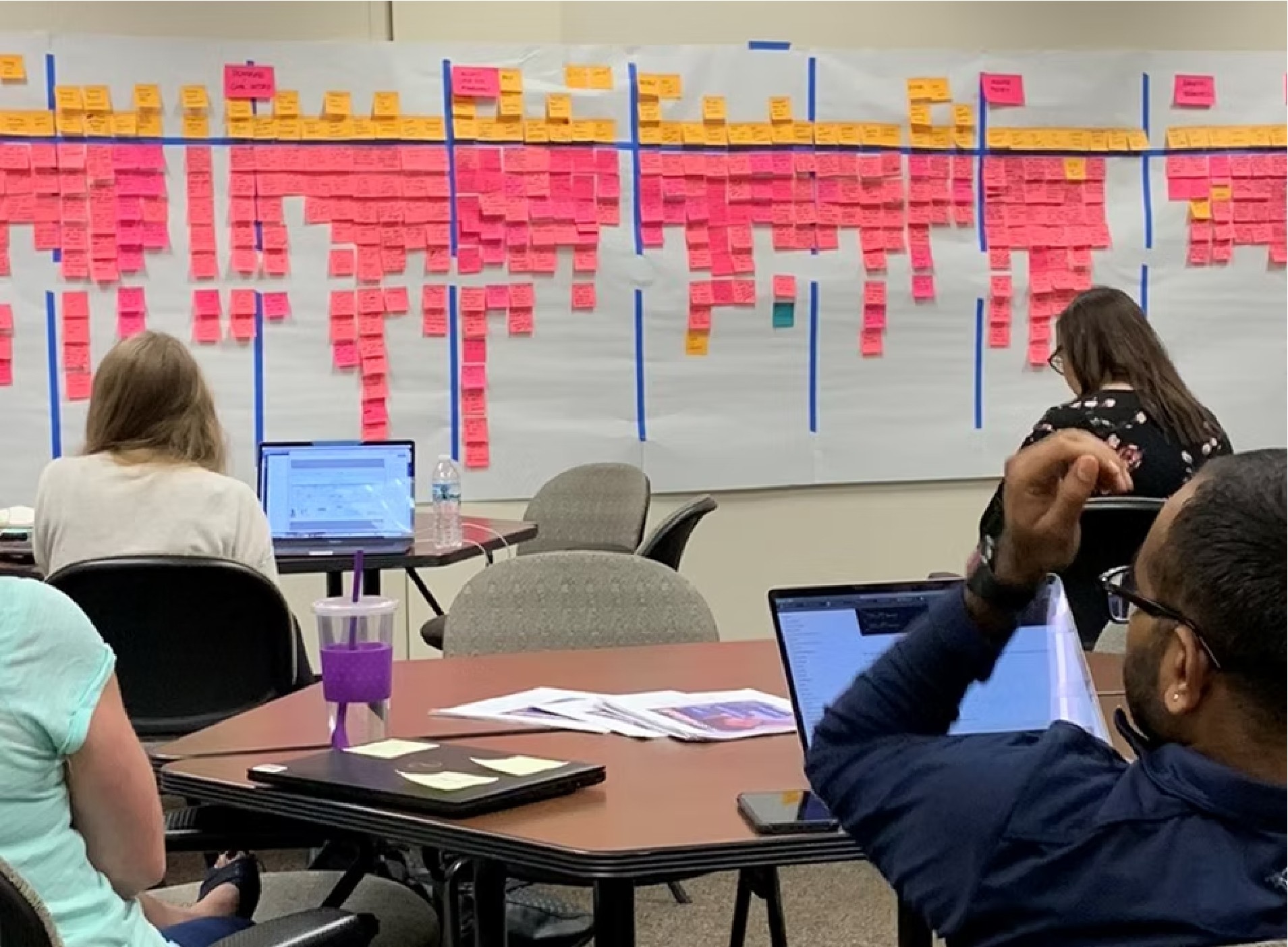
Cross-Function Collaborative Workshops
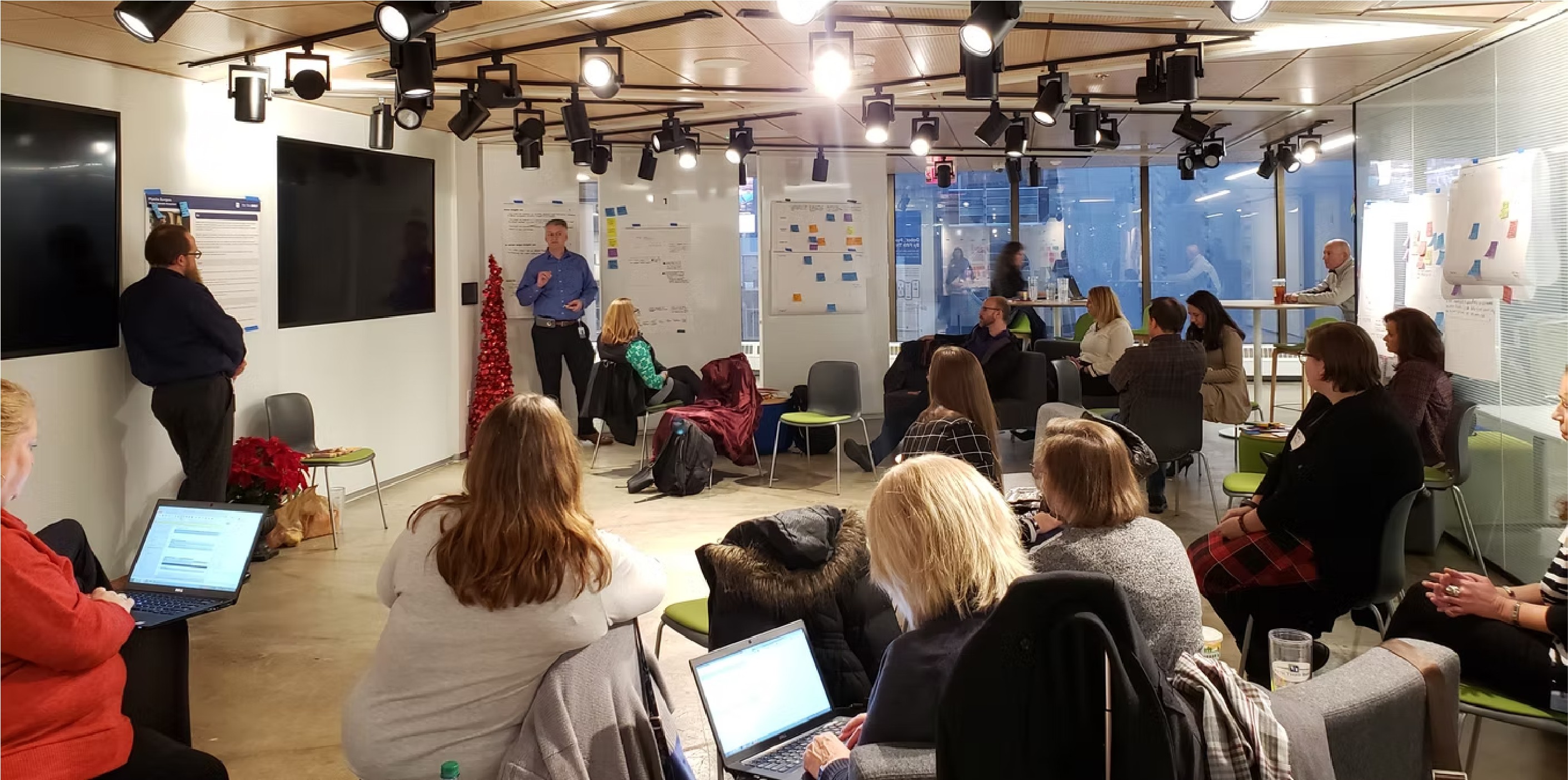
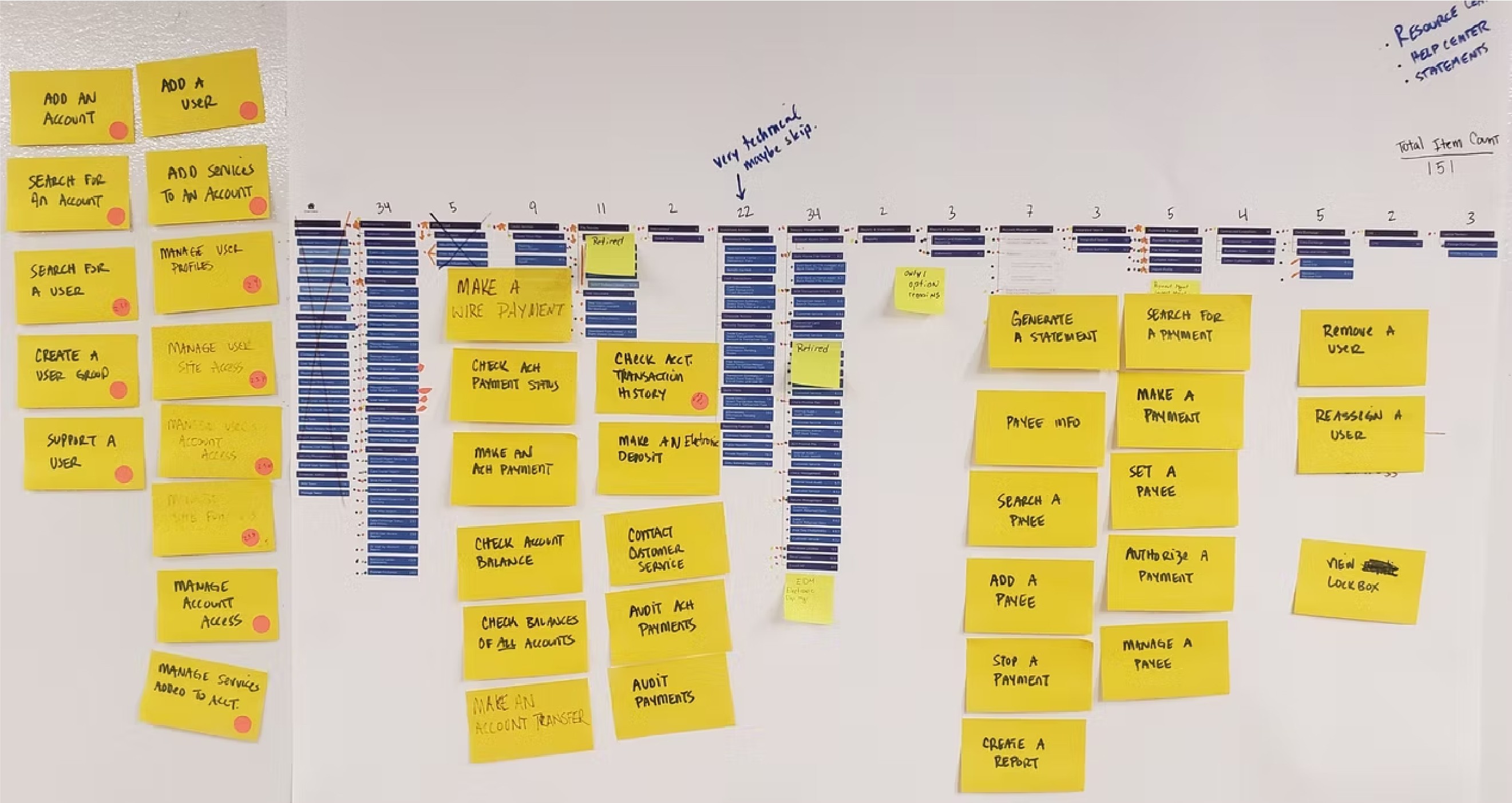
Story Mapping
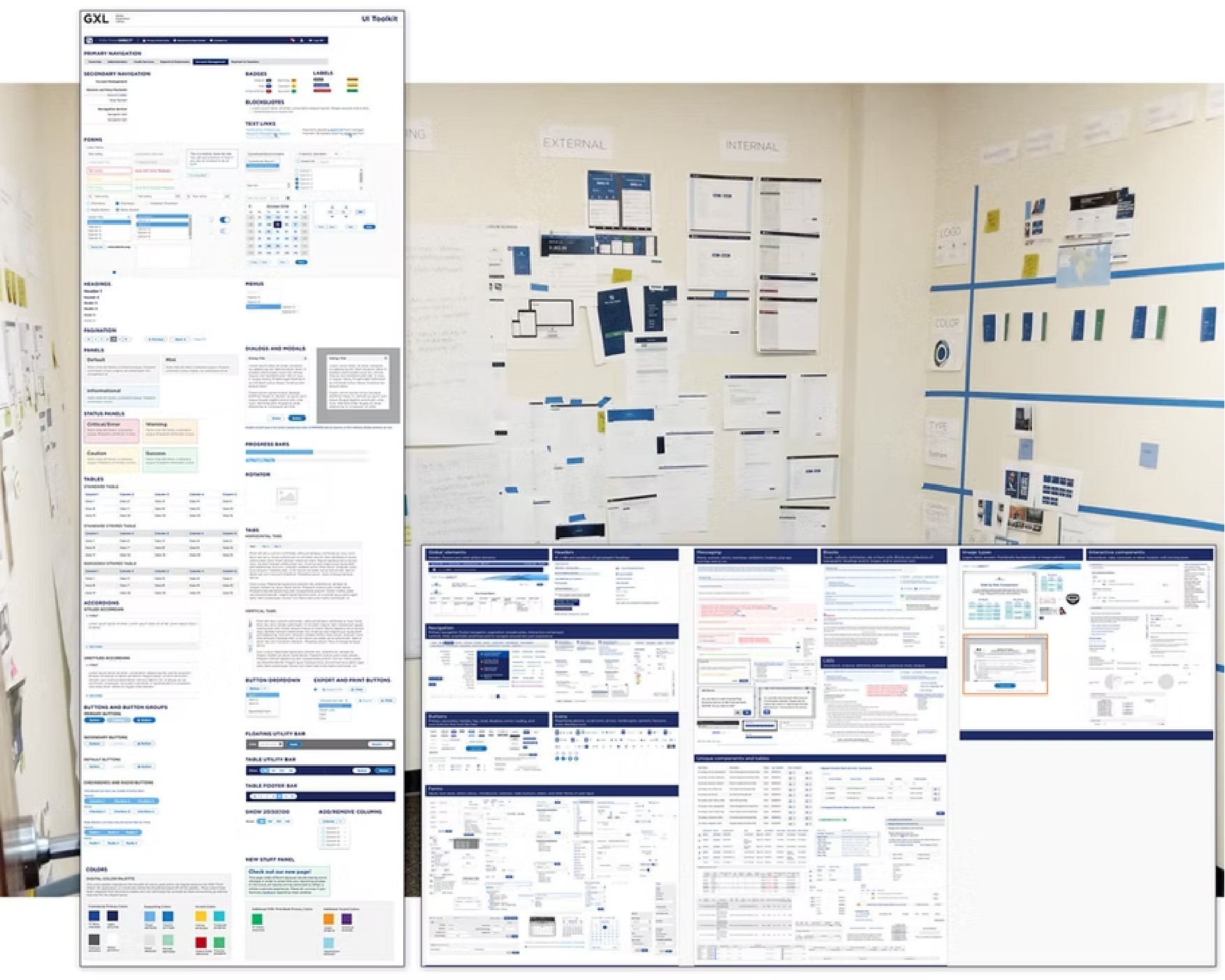
Design System Audits
Information (re)Architecture
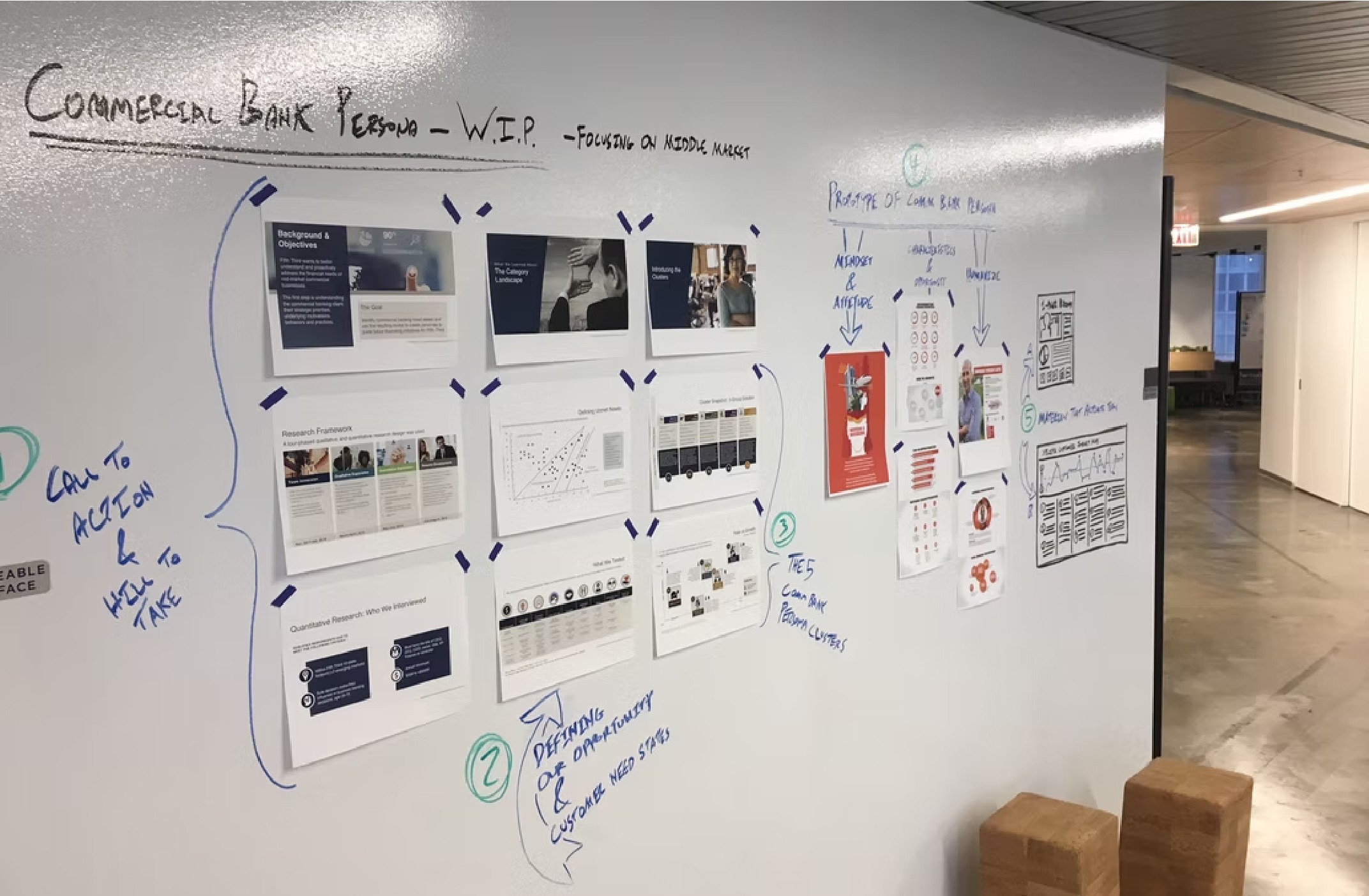
User Persona Development
Design Thinking LUMA Exercises
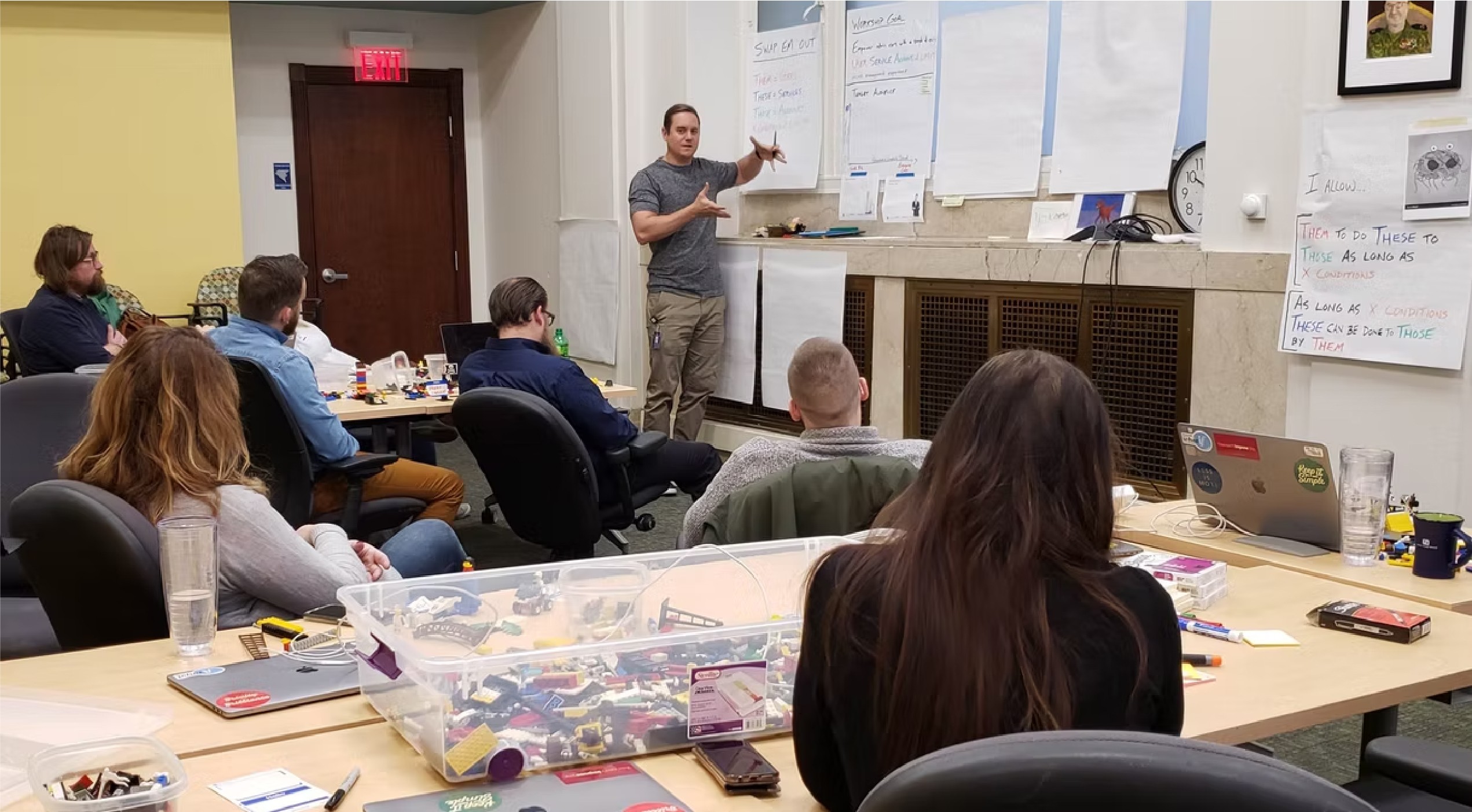
Cross-Function Collaborative Workshops
Story Mapping
Design System Audits
Information (re)Architecture
User Persona Development
Design Thinking LUMA Exercises
Cross-Function Collaborative Workshops
Story Mapping
Design System Audits
Information (re)Architecture
User Persona Development
Design Thinking LUMA Exercises
Outcomes
Enterprise UX rarely moves fast. The organizational constraints on this project were real: no direct access to end users, a complex stakeholder environment, and a product with years of accumulated technical debt. The research process had to work around all of it.
What it produced was a clear, evidence-backed picture of where the product was failing its users and what it would take to fix it. From that foundation, a significant portion of the proposed work made it into production: customizable homepage shortcuts, a front-end visual refresh, Copy Existing User Entitlements, a Universal Access toggle, a Rights and Services page redesign, contextual help modules in key problem areas, and an enhanced Message Center.
The features that shipped weren't the easiest ones. They were the ones the research said mattered most. That's the outcome worth measuring.