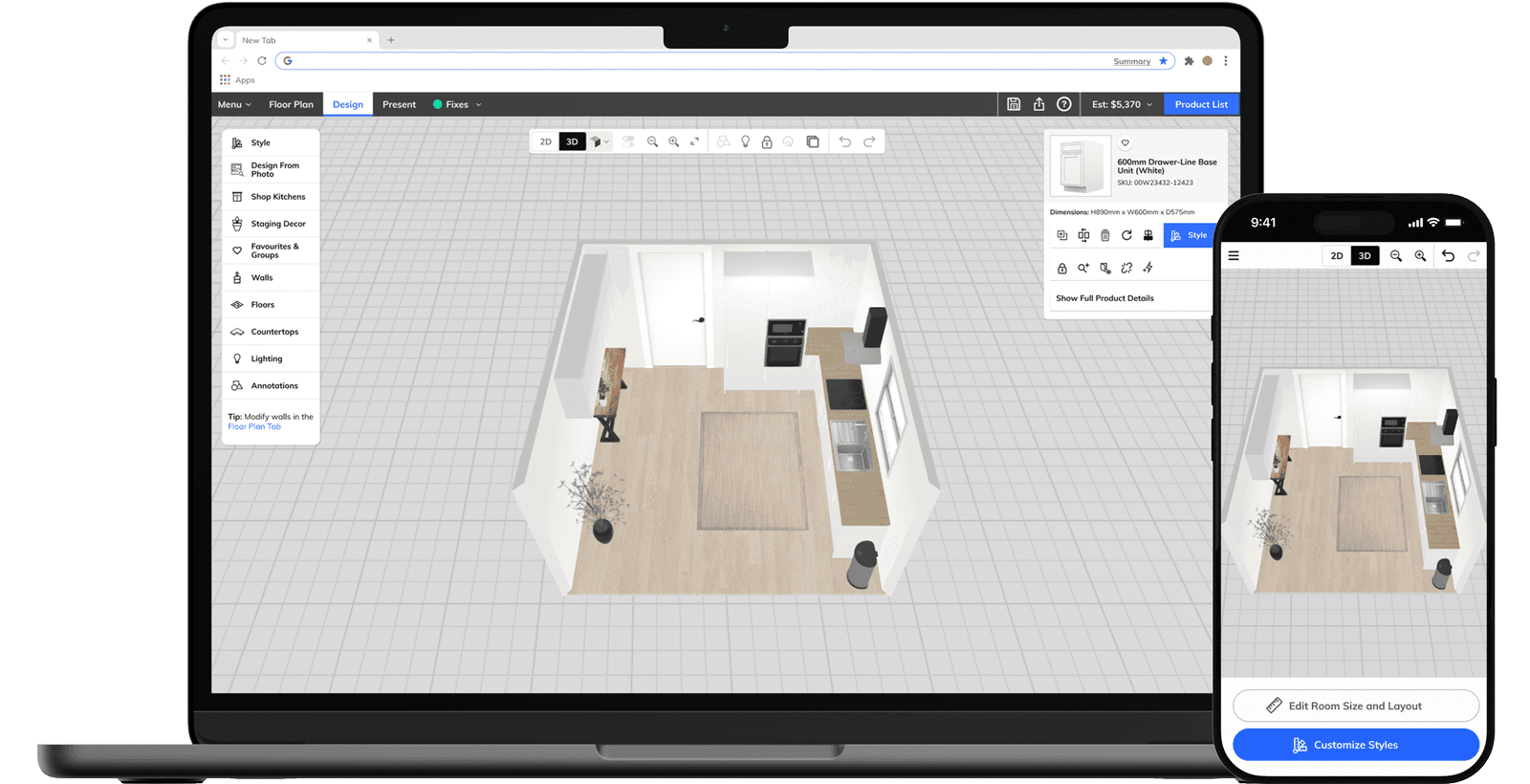
3D Cloud (formerly Marxent) builds whitelabel room planning software for enterprise retail clients: Lowe's, B&Q, Howdens, and Home Depot. The product lets consumers design their own kitchens, bed/bath/living rooms, and outdoor spaces in 3D, then purchase directly through the retailer's e-commerce channel.
I spent four years designing across the entire platform, from core drawing tools and navigation architecture, to spatial features like ceiling planes and stairs, to mobile consumer journey strategy and prototyping. Every design decision lived inside a dense web of constraints: a real-time 3D rendering engine, a whitelabel system serving multiple brand identities simultaneously, and enterprise client requirements that frequently conflicted with consumer usability goals.
This is the story of how that platform grew.
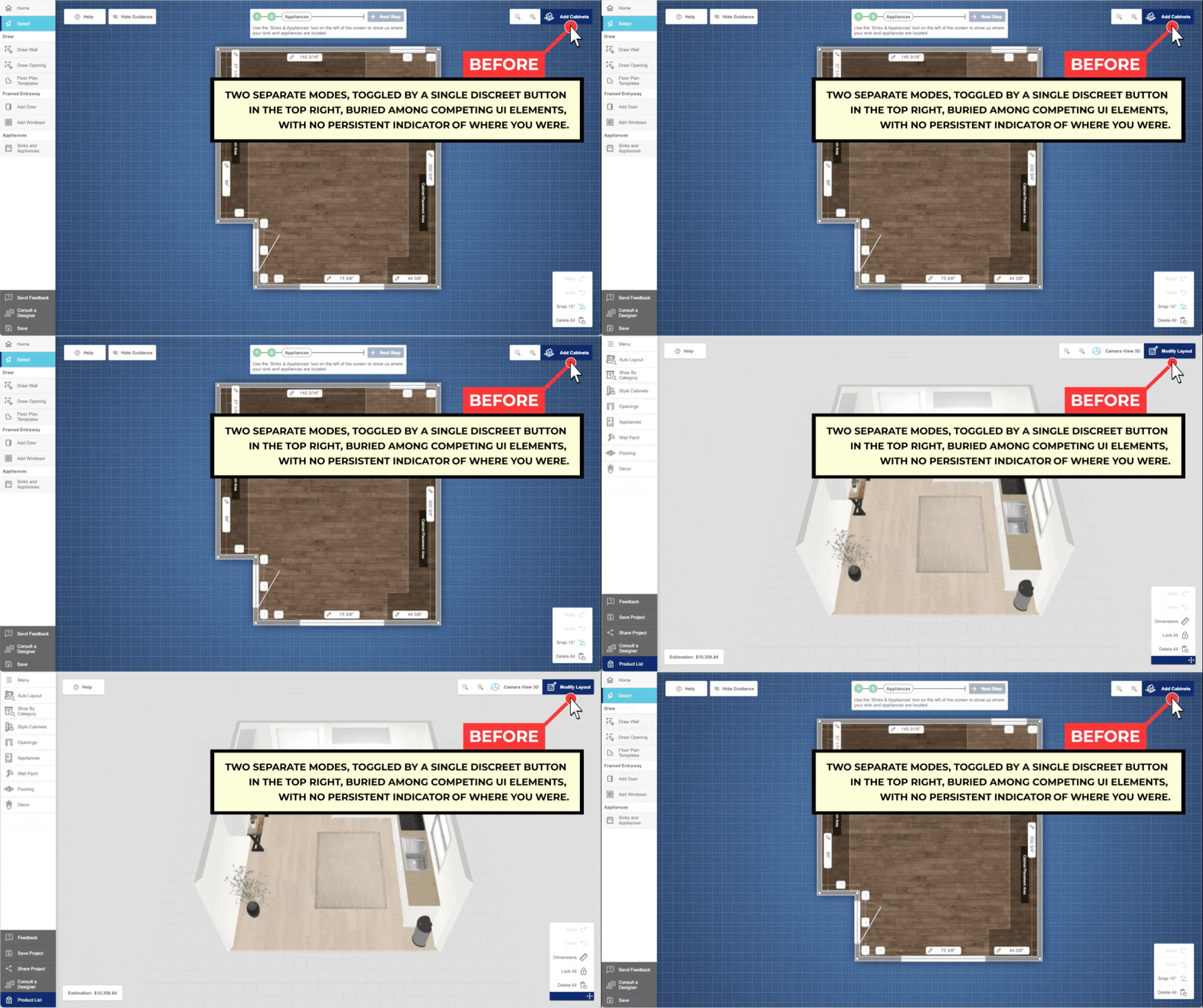
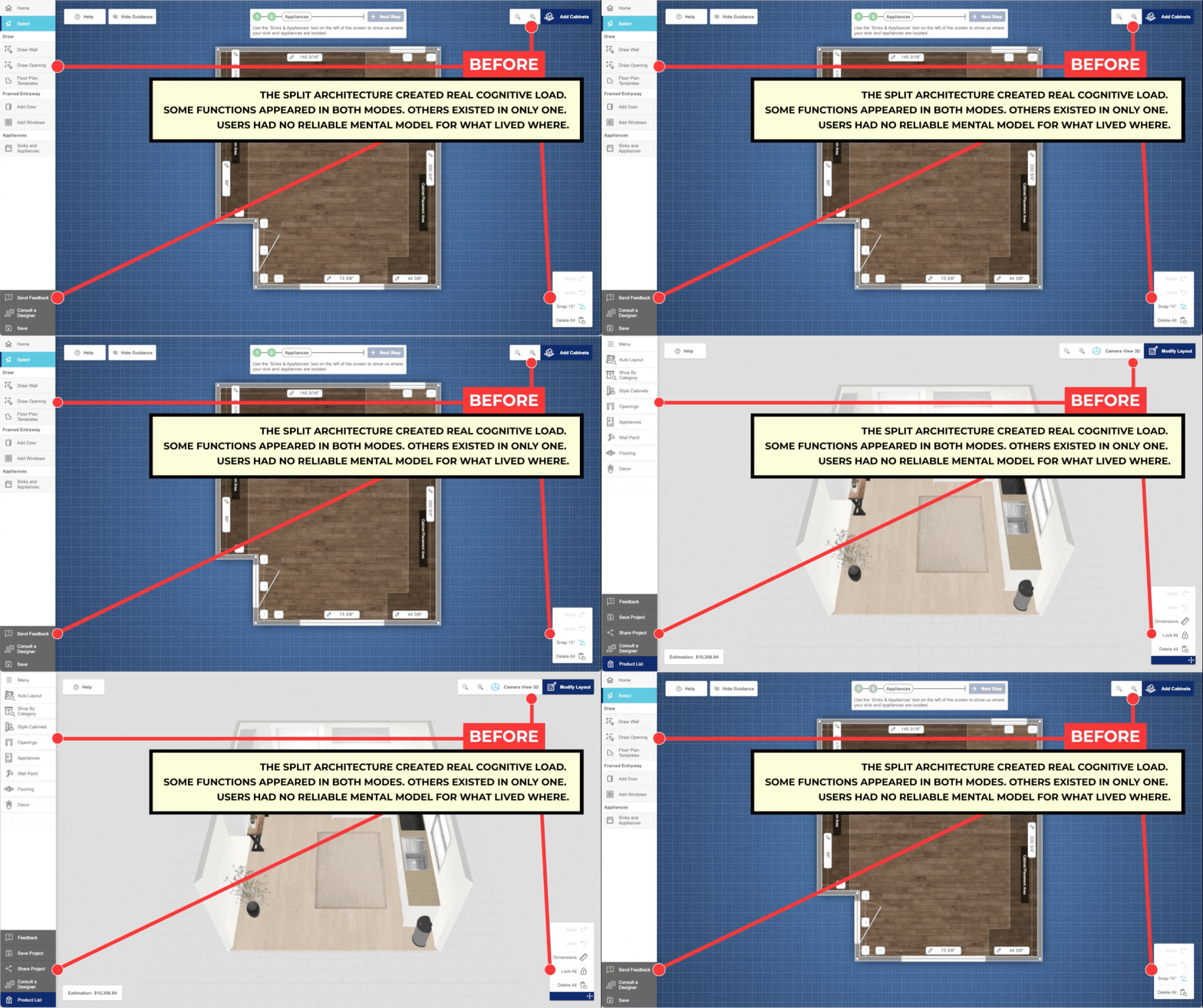
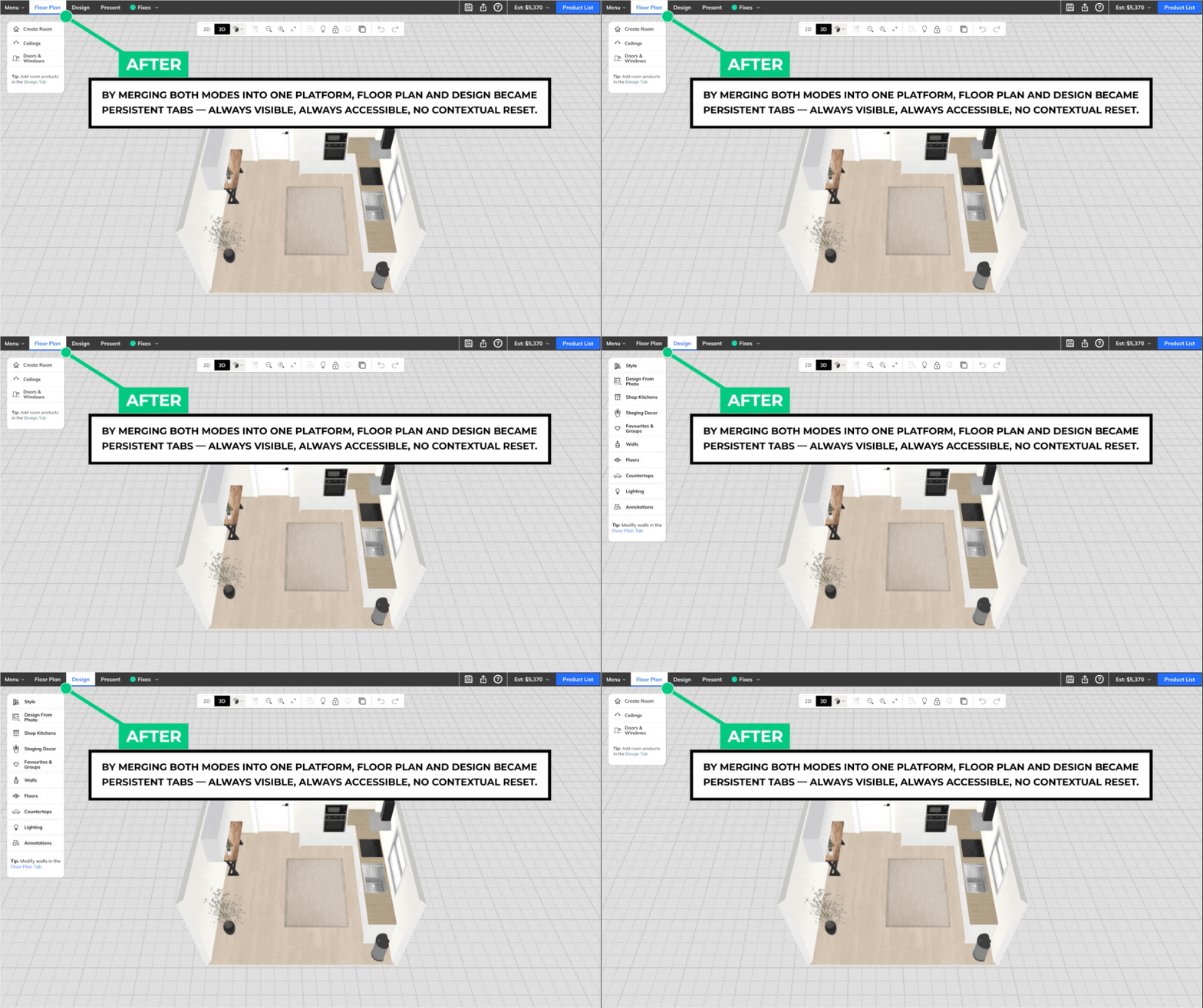
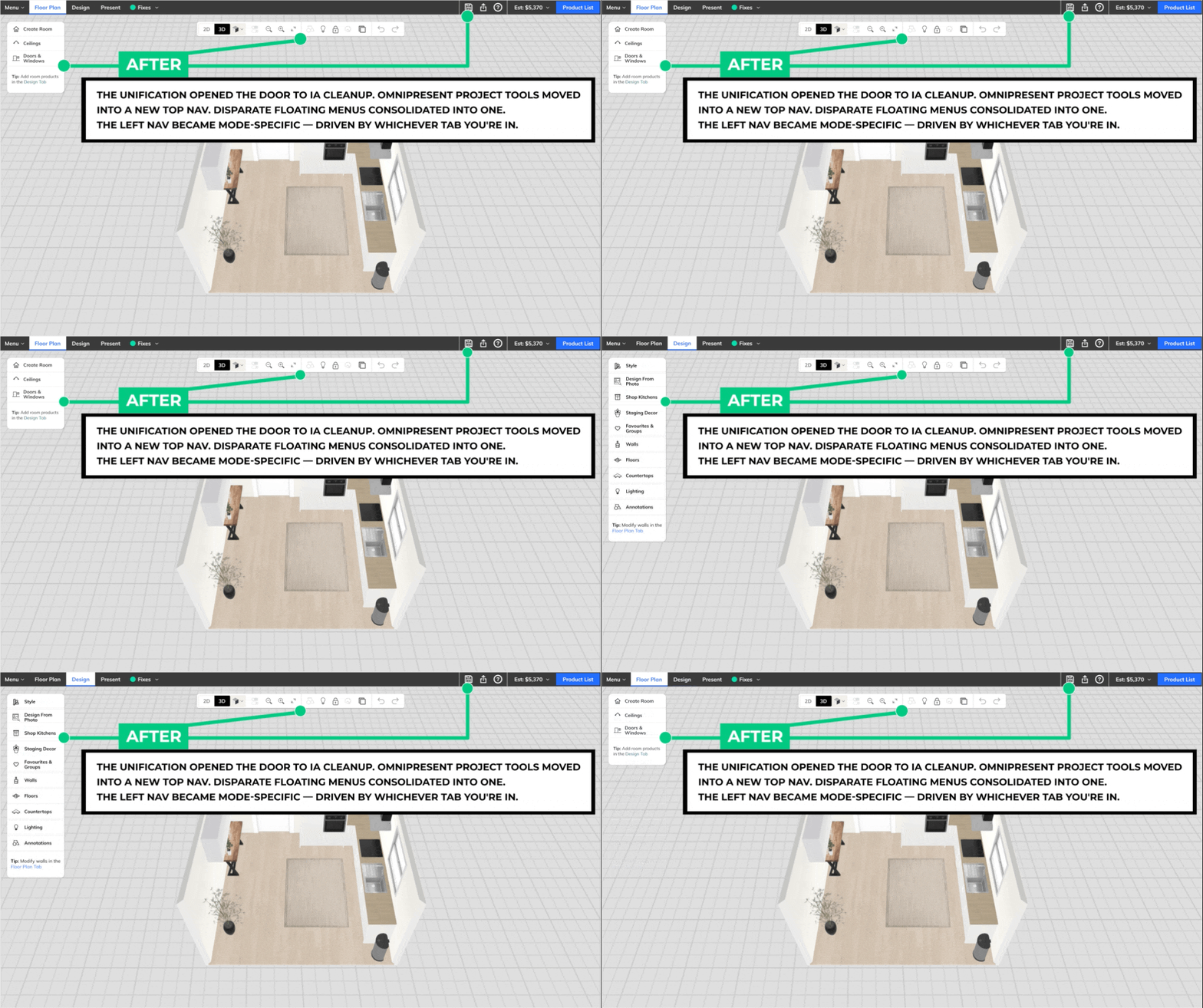
Chapter 1 — The Merge
Chapter 2 — Decking
Chapter 3 — Ceilings
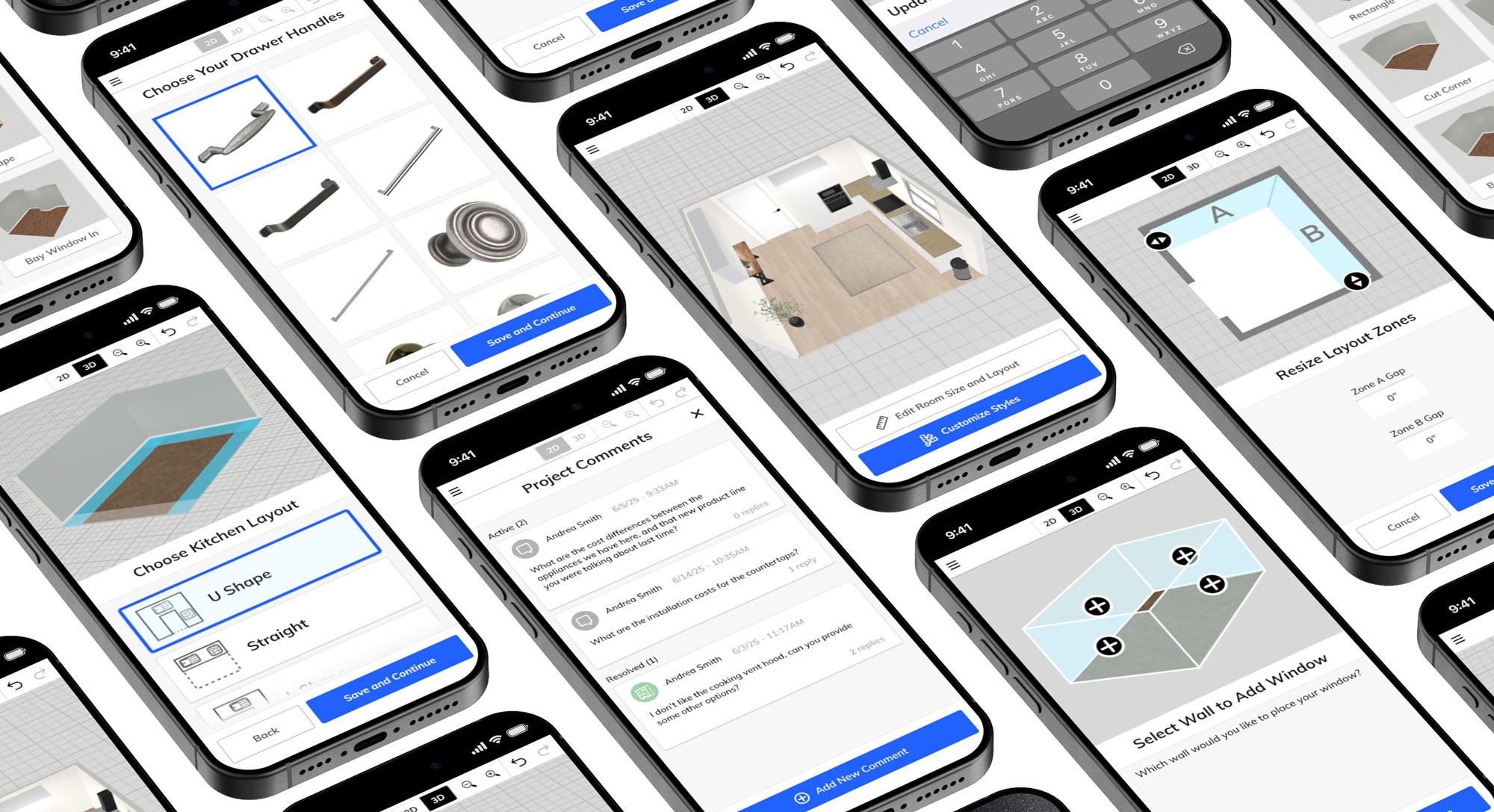
Chapter 4 — Mobile
Outcomes
The unified platform delivered. A fragmented two-mode application became a single coherent experience, and the architecture proved scalable across every feature that followed.
Decking was the first proof point. Designed as the hardest possible test of the new platform, it shipped to strong reception from Lowe's and Home Depot and earned a SUS score of 4.8 out of 5 from end users. If it worked for decking, it would work for the rest, and it did.
Ceilings followed, rolling out across all clients after beginning as a single client request. The mobile consumer journey completed its validation testing and is currently in active development, with a fit and finish review recently completed.
Four years. One platform. Built to scale.